
The International Day of Awareness of Food Loss and Waste is an important moment to focus attention on a global challenge. For food manufacturers, it should also prompt a commercial question: how much value has already been invested in producing food, and how much of that value could still be retained?
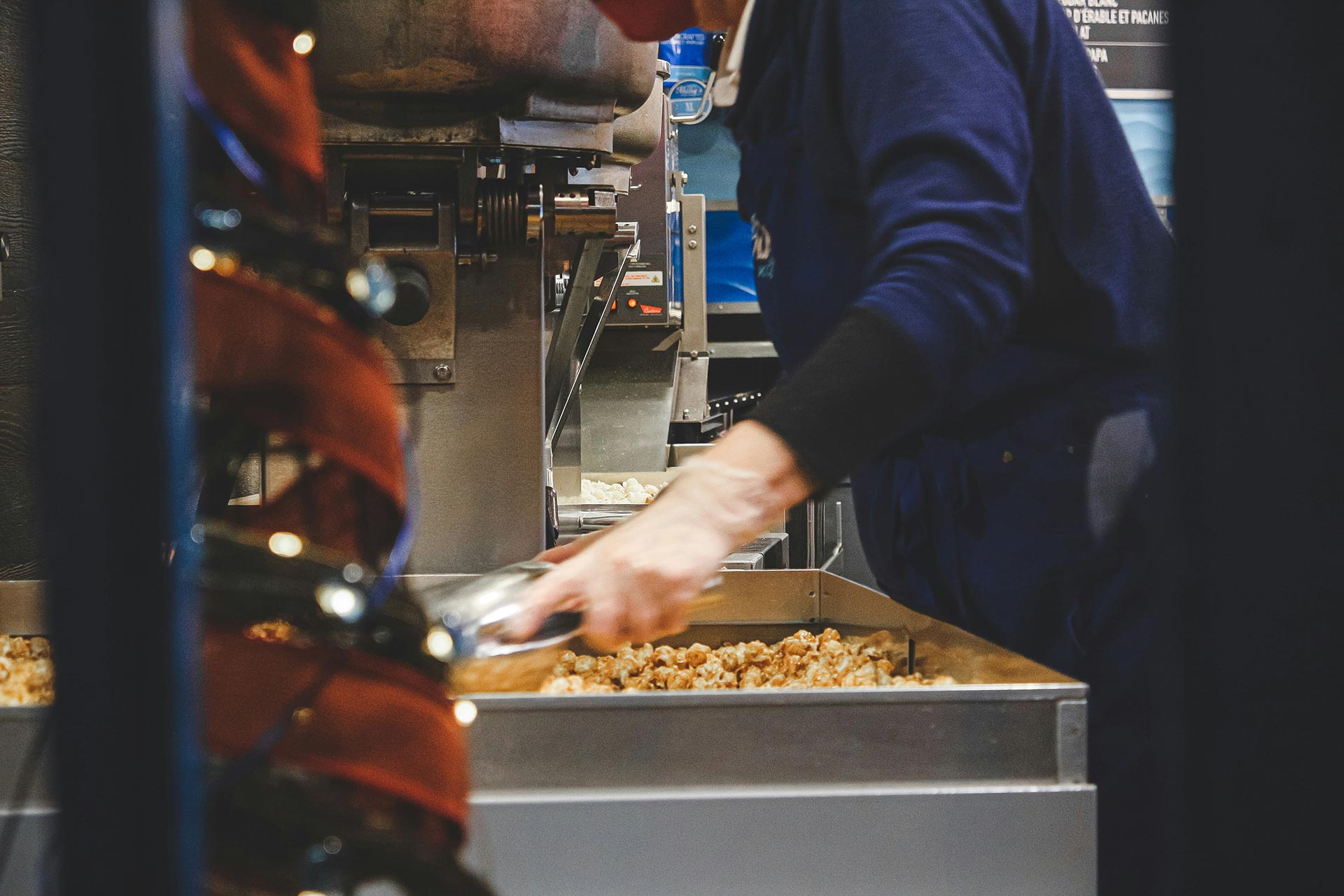
Food does not lose the ingredients, energy, labour, production time and investment committed to making it simply because its original route has changed.
The theme for this year’s International Day of Awareness of Food Loss and Waste is the transformative potential of reducing food loss and waste. Realising that potential requires more than awareness. It depends on how quickly businesses identify surplus, when decisions are made and whether every viable outcome is considered before food moves down the value chain.
By the time surplus is treated primarily as a disposal issue, many of the best opportunities to protect the food and the value invested in producing it may already have been lost.The challenge is that surplus is still too often viewed through a binary lens: saleable or unsaleable, in specification or out, useful or waste.
Better outcomes begin with earlier decisions
Food surplus can arise for many reasons. Production overruns, specification changes, interrupted orders, damaged outer packaging, seasonal demand and manufacturing by-products can all leave businesses with food or ingredients that can no longer follow their intended route.
That does not mean the food, or the investment behind it, has lost all its value.
Earlier visibility gives commercial, operational and technical teams more time to understand the material, assess its condition and identify alternative uses. It can also help a manufacturer recognise recurring patterns and address the source of surplus before it arises again.
The question should not simply be, “How do we remove this material?” It should be:
“What is the highest viable value this food can still deliver?”
Not every surplus stream should follow the same route
Surplus is not one uniform category. A finished product approaching the end of its commercial window presents a different opportunity from production off-cuts, manufacturing by-products or an ingredient that no longer meets its original specification.
Applying the same outlet to every stream can overlook opportunities to retain both food and commercial value.
The best outcome depends on factors including food safety, quality, composition, volume, consistency, shelf life, traceability and the availability of a suitable market. Understanding those factors early allows businesses to make a better-informed decision rather than defaulting to the most familiar route.
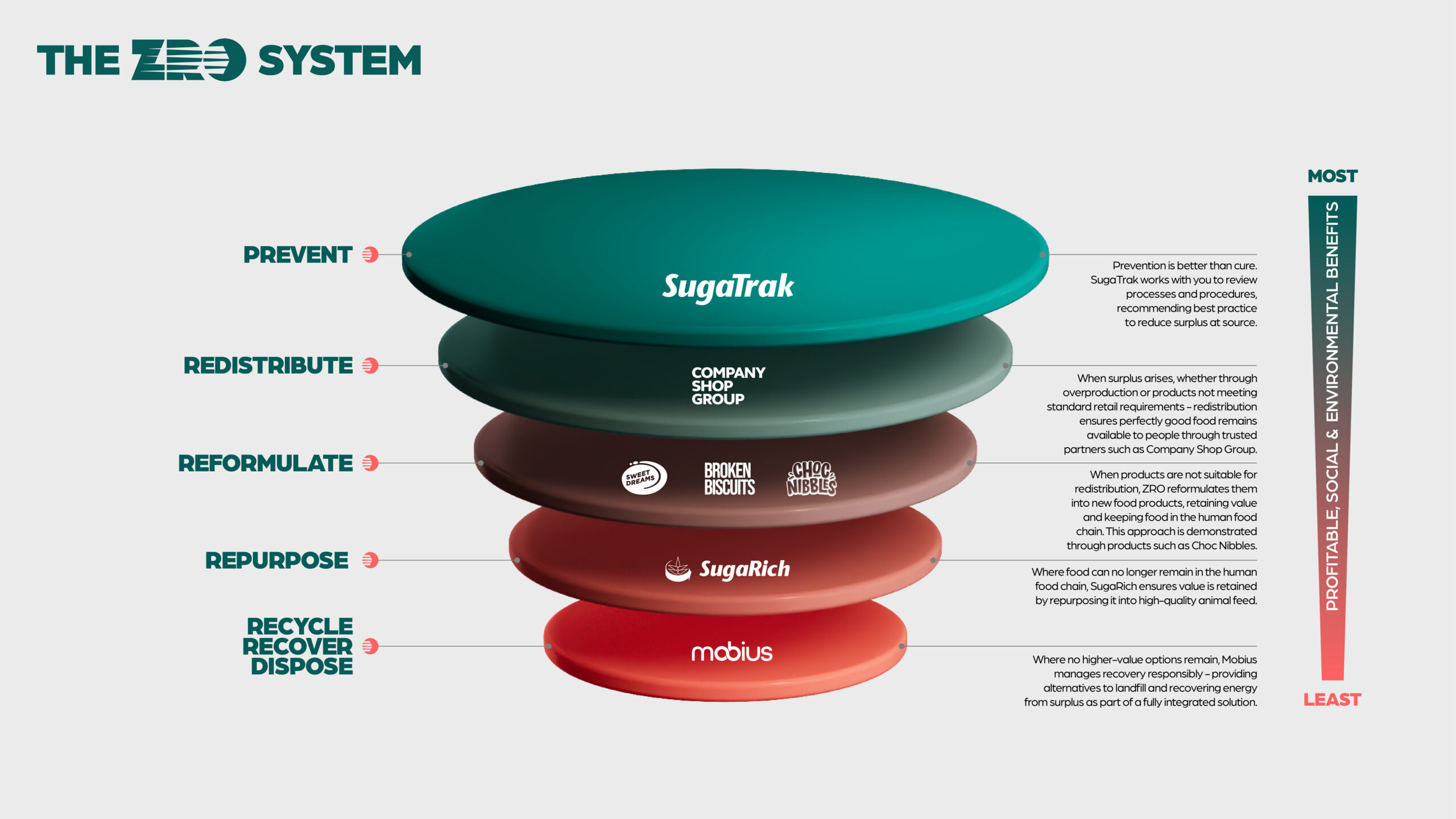
This is why ZRO connects five routes through one system:
- Prevent: identify why surplus is arising and reduce it at source wherever possible.
- Redistribute: redirect suitable food to people through trusted redistribution partners.
- Reformulate: transform suitable food or ingredients into new products for human consumption.
- Repurpose: when food-to-food options are no longer viable, transform suitable surplus into animal-feed ingredients, retaining its nutritional and commercial value.
- Recover: retain value from the remaining material through the most appropriate recovery route.
The routes are connected by one principle: Food Stays Food.
That means creating every opportunity to keep food in the human food chain, while recognising that the right outcome must be practical, safe and commercially viable.
It also means looking beyond tonnage alone. Volume is important, but it does not tell the whole story. A higher-value outcome can protect more of the ingredients, resources and investment already embedded within that food.
Protecting food means protecting invested value
This distinction is vitally important and often overlooked.
Reducing food loss is not only about managing or diverting volume. It is about protecting the ingredients, energy, labour, production capacity and commercial investment already committed to producing food – and finding credible ways to retain that value.
Once those resources have been used, their value cannot be protected simply by removing the resulting surplus efficiently. The greater opportunity is to preserve as much of their combined value as possible through the next viable use.
That creates a stronger basis for decision-making. Instead of asking only how many tonnes have been managed, businesses can also consider where the material went, what value was retained and whether a better outcome could have been achieved.
Evidence that a different approach can create value
Working with one large UK biscuit manufacturer, ZRO reviewed surplus streams that had previously been directed entirely to animal feed.
Between September 2025 and August 2026, more than 670 tonnes of surplus material were managed through the ZRO system. Today, over 30% is retained for food, with the remainder repurposed through feed.
This has created more than £224,000 in new revenue for the manufacturer – demonstrating how better visibility and earlier decisions can protect more of the value already invested in producing food.
The result did not come from finding one outlet for everything. It came from looking at individual streams differently and matching each one to the best viable route.
It demonstrates that protecting food and protecting commercial value do not need to be competing priorities. With earlier decisions and access to a connected range of options, they can support one another.
Moving from awareness to action
A practical starting point for manufacturers is to review:
- Where and why surplus arises.
- What ingredients, resources and costs are already invested in it.
- How early each stream becomes visible.
- Which routes are being used today.
- Whether higher-value food-to-food options have been fully explored.
- What evidence, partnerships or technical work could unlock a better outcome.
There will not be one answer for every product, site or market. The opportunity lies in making each decision with better information and access to a wider range of routes.
Awareness identifies the challenge. Earlier, connected and evidence-led action protects more of what has already gone into producing food – and creates greater opportunity to retain its value.
Could more value be retained from your surplus?
ZRO works with manufacturers to understand where surplus arises, assess the routes currently being used and identify opportunities for higher-value outcomes.

