Introduction
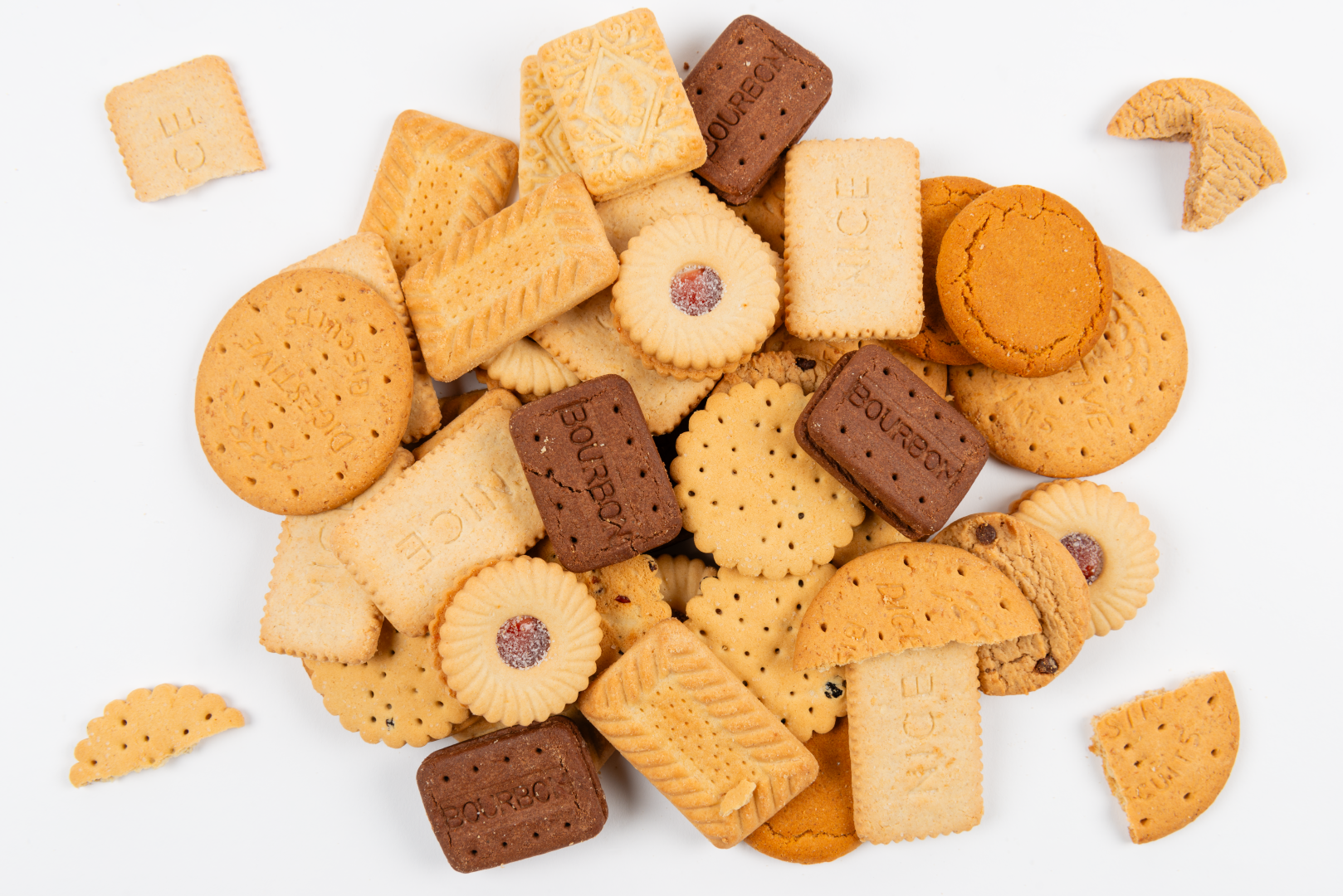
A large-scale bakery manufacturer produces high volumes of biscuits, where a degree of breakage is an expected part of the manufacturing process.
Although these broken biscuits do not meet finished product specifications, they have already passed through stringent food safety and production processes, making them suitable for alternative reuse pathways.
Despite this, such co-products are often undervalued and directed towards lower-value outlets.
The Challenge
At this site, broken biscuits were routinely sent to animal feed, a common but low-value route for surplus food materials.
While this provided a consistent outlet, it did not reflect the intrinsic value of the product. The business recognised an opportunity to rethink this approach and explore whether a more effective route-to-market could:
• better preserve the value of the material
• remain fully compliant with food safety requirements
• deliver improved commercial returns
• reduce reliance on lower-value disposal pathways
The challenge was not the material itself – but how it was being used.
The ZRO Approach (via Mobius)
Using Mobius’ Power BI-driven analysis, the business gained clearer visibility of its co-product streams, route performance, and value potential.
This data-led approach enabled a direct comparison between traditional disposal pathways and higher-value reuse opportunities.Once suitability for reuse was confirmed, Mobius helped transition the material into a structured reuse pathway – moving it higher up the value chain while maintaining safety and compliance standards throughout.
Implementation
The transition to reuse was achieved through a structured, step-by-step approach:
• Detailed assessment and categorisation of biscuit co-product streams
• Verification that material met safety and quality criteria for reuse
• Identification and activation of a suitable reuse pathway
• Integration into existing operational processes
• Ongoing performance tracking using Mobius data analysis tools
This ensured the solution was not only effective, but repeatable and scalable.
The Results
By redirecting broken biscuits from animal feed into reuse pathways, the manufacturer achieved a:
393% increase in value yield
for a comparable volume of material.
The Outcome
The material didn’t change.
The outcome did.
Using data-led reuse pathways, the business unlocked significantly more value from the same co-products – simply by keeping food higher within the food chain.
When food stays food, value stays higher.
This project was delivered prior to the transition of Sweetdreams Ltd to ZRO Group Ltd in June 2026.
